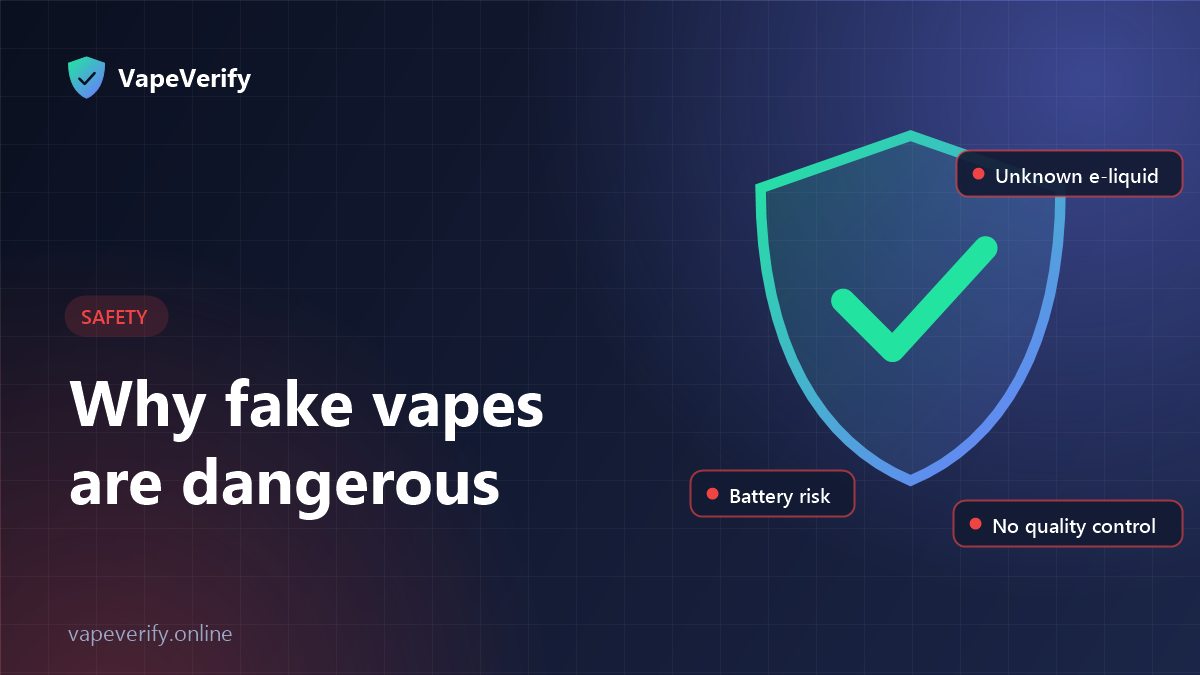
A counterfeit vape is not just a copyright problem. A genuine device is made by a manufacturer that has to meet product rules in the markets it sells to. A fake one has no such obligation – and no one is accountable for what is inside.
What can go wrong with a fake vape
Unknown e-liquid
The ingredients, nicotine strength and quality of the e-liquid in a counterfeit are unknown. Independent tests of illegal and counterfeit vapes reported in the media have found products that did not match their labels, including nicotine levels above legal limits.
Poor-quality components
Cheap coils and materials can overheat, produce a burnt taste and break down faster. Some tests of illegal devices have reported metals at levels well above what is allowed in regulated products.
Battery risks
Batteries without proper protection circuits are more likely to fail. Overheating, swelling or leaking batteries are a real risk with uncontrolled products.
No support, no recourse
If something goes wrong, there is no manufacturer to contact and no warranty.
How security codes protect you
Brands fight counterfeits with unique codes printed on every box. Each code exists once in the manufacturer’s database. When you check it on the official website, the system confirms the code is real – and often how many times it has already been checked.
- Scratch-off coating keeps the code hidden until purchase.
- One-time or limited checks expose copied codes.
- Holographic labels are hard to reproduce.
- QR codes make checking fast – as long as you confirm the website domain.
Check before you vape
It takes about two minutes. Choose your brand from the VapeVerify brand list, follow the step-by-step guide and get the answer straight from the manufacturer.